
Over the past five years, searches for “red light therapy before and after” have soared 300% worldwide. Instagram and Reddit are packed with photos showing clearer skin, faster muscle recovery, and reduced joint pain. Are these results legit? Here’s the research-backed truth—and how the light actually works at the cellular level.
What Is Red Light Therapy?
Red Light Therapy (RLT)—also called low-level light/laser therapy (LLLT)—uses narrow bands of red (≈ 630–670 nm) and near-infrared (≈ 810–880 nm) light. Photons are absorbed by cytochrome-c oxidase in mitochondria, boosting ATP production so cells repair, regenerate, and calm inflammation more effectively.
- 660 nm red light (visible): reaches the epidermis and upper dermis, boosting collagen, smoothing texture, and softening fine lines (see skin-science guide).
- 850 nm near-infrared (invisible): penetrates 2–4 cm to ease muscle soreness, calm joint pain, reduce inflammation, and accelerate wound closure.

Common “Before” Problems People Face
Most people turn to red light therapy because they’re stuck with one or more of these issues:
- Visible skin ageing — wrinkles, laxity and uneven tone.
- Stubborn acne, scars or rosacea — breakouts and post-acne marks that linger.
- Persistent joint or muscle pain — soreness that limits daily life or training.
- Inflammation & swelling — arthritis flare-ups, tendonitis, bursitis.
- Slow recovery & wound healing — delayed muscle repair or cuts that close slowly.

Remarkable “After” Changes You Can Expect
With consistent use—10 minutes a day, 3–5 times a week—users commonly report:
- Smoother, younger-looking skin. Dull tone and fine lines give way to firmness and glow as collagen and elastin rise.
- Less chronic & acute pain. After 2–4 weeks, stiff joints loosen and muscle spasms subside thanks to 850 nm light’s anti-inflammatory effect (read inflammation review).
- Faster muscle recovery. Athletes report up to 30 % less soreness and quicker turnaround between training sessions (follow the recovery protocol).
- Clearer complexion. Acne lesions shrink, redness fades and post-inflammatory scars lighten.
- Quicker wound healing. Photobiomodulation speeds fibroblast activity, closing cuts and surgical sites faster.
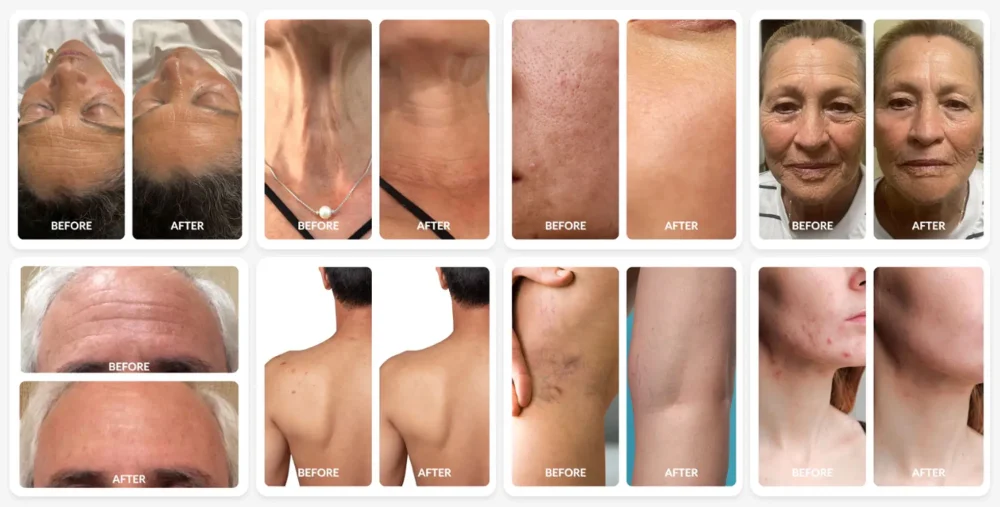
How to Achieve the Best “Before & After” Results
Choosing a high-quality, science-driven device is crucial. Youlumi, a professional LED manufacturer, offers panels with industry-leading technology:
- Precise wavelengths: the proven 660 nm red + 850 nm NIR combination targets both skin and deep tissue.
- High irradiance: over 110 mW/cm² at 6 inches ensures an effective dose in a short session.
- Variety of options: panels from 150 W to 600 W cover needs from spot treatment to full-body therapy.

Ready to experience your own transformation? Visit the product page for the Youlumi Red Panel Light – Tabletop to view full specs, operating tips and user guidance.
Conclusion
The impressive “before and after” effects of red light therapy are backed by solid science and real-world results. By delivering precise light that fuels cellular repair, RLT excels in skin rejuvenation, pain relief, muscle recovery, and more. Choose a professional-grade device—use it consistently—and your own remarkable improvements could be just weeks away.
Red Light Therapy: Frequently Asked Questions
How long until I see real “before & after” results?
Most users notice subtle changes (calmer skin tone, less stiffness) in 2–4 weeks. Visible skin rejuvenation and acne-mark fading typically build over 6–12 weeks. Joint and muscle comfort often improves within 1–3 weeks when sessions are consistent.
What’s the ideal session dose, distance, and frequency?
Start with 8–12 minutes per area, 3–5 days/week, at about 6–12 inches from the panel. With higher-irradiance devices (e.g., ≥110 mW/cm² @ 6″), shorter times often suffice. Increase gradually if well-tolerated. See our frequency guide.
Which wavelengths work best for “before & after” improvements?
The proven pairing is 660 nm red (skin-level support for tone, texture, collagen) + 850 nm near-infrared (deeper tissues for recovery and comfort). Learn more in the equipment guide and red vs blue comparison.
Is red light therapy safe? Any side effects?
RLT is generally well-tolerated. Possible, usually mild effects include temporary warmth, transient redness, or dryness. Avoid staring directly into bright LEDs and consider eye shields. If you have a photosensitive condition, migraines triggered by light, or are on photosensitizing meds, consult a clinician first.
Can I use RLT with acne or rosacea?
Yes—many users report calmer redness and fewer breakouts. Start with shorter sessions and increase slowly. If you use retinoids or have recently used isotretinoin, get medical advice before starting. For background, see our skin science overview.
Will it help wrinkles and skin firmness?
Consistent 660 nm exposure can stimulate fibroblast activity and support new collagen and elastin over time, which may soften fine lines and improve firmness. Expect gradual changes over 8–12+ weeks, maintained with ongoing sessions.
Does it actually reduce inflammation and soreness?
Near-infrared (≈850 nm) is commonly used to support natural anti-inflammatory pathways and mitochondrial energy in muscles and joints, which can translate to less soreness and faster recovery. For protocols, see inflammation and muscle recovery.
Do I need eye protection?
Avoid direct staring into the LEDs. Many users keep eyes closed or wear protective goggles, especially with high-output panels or if you feel light sensitivity. If you have any ocular condition, consult your eye-care professional first.
Who should avoid or get medical clearance first?
Get professional guidance if you’re pregnant, have active cancer, photosensitive disorders, uncontrolled thyroid disease, recent steroid injections, or are using photosensitizing medications. When in doubt, patch test a short session on a small area first.
How should I prep skin—and can I combine RLT with skincare?
Start with clean, dry skin. Avoid photosensitizers before sessions (e.g., certain acids or strong retinoids). Apply serums or moisturizers after your session. Use sunscreen for daytime exposure as usual.
How do I take honest before/after photos?
Keep lighting, angle, distance, camera, and time of day identical. Disable filters/beauty modes. Note your device, distance, and minutes per session. Capture progress every 2–4 weeks.
Which Youlumi device should I choose?
For targeted areas, a compact panel is convenient; for larger coverage and faster routines, consider higher-power models. Explore specs on the Youlumi Red Light Therapy Panel or the Youlumi Belt 40W for portable, on-the-go relief.


