
Executive Summary
- Mechanism: PBM stimulates mitochondrial ATP production, fueling cellular energy.
- Wavelengths: Near-Infrared (850nm) is critical for deep muscle and joint penetration.
- Application: Dual-protocol approach (Pre-workout for priming; Post-workout for recovery).
- Outcome: Clinically proven to reduce DOMS, accelerate tissue repair, and reduce inflammation.
In recent years, Red Light Therapy (RLT) panels have evolved from niche biohacking tools to essential equipment in elite training facilities. Scientifically known as Photobiomodulation (PBM), this non-invasive therapy utilizes specific light wavelengths to optimize cellular regeneration and energy efficiency.
For athletes, efficacy relies on the interaction between Red Light (660nm) and Near-Infrared Light (850nm). A comprehensive review of clinical trials confirms that PBM can effectively increase muscle hypertrophy, modulate inflammation, and significantly reduce oxidative stress.

The Spectrum: Red vs. Near-Infrared (NIR)
To optimize performance, understanding the depth of penetration is crucial. RLT functions by targeting the mitochondria. (See our Wavelength Selection Guide).
Red Light (660nm)
Surface Application
Primarily absorbed by the skin layers. It promotes collagen density, enhances capillary blood flow, and accelerates surface wound healing. Essential for dermatological health but limited in depth.
Near-Infrared (850nm)
Deep Tissue Application
The athlete’s standard. Invisible to the naked eye, these wavelengths penetrate deep into muscle fibers, tendons, and joint capsules to directly stimulate ATP synthesis and reduce systemic inflammation.
Clinical Benefits for Athletic Performance
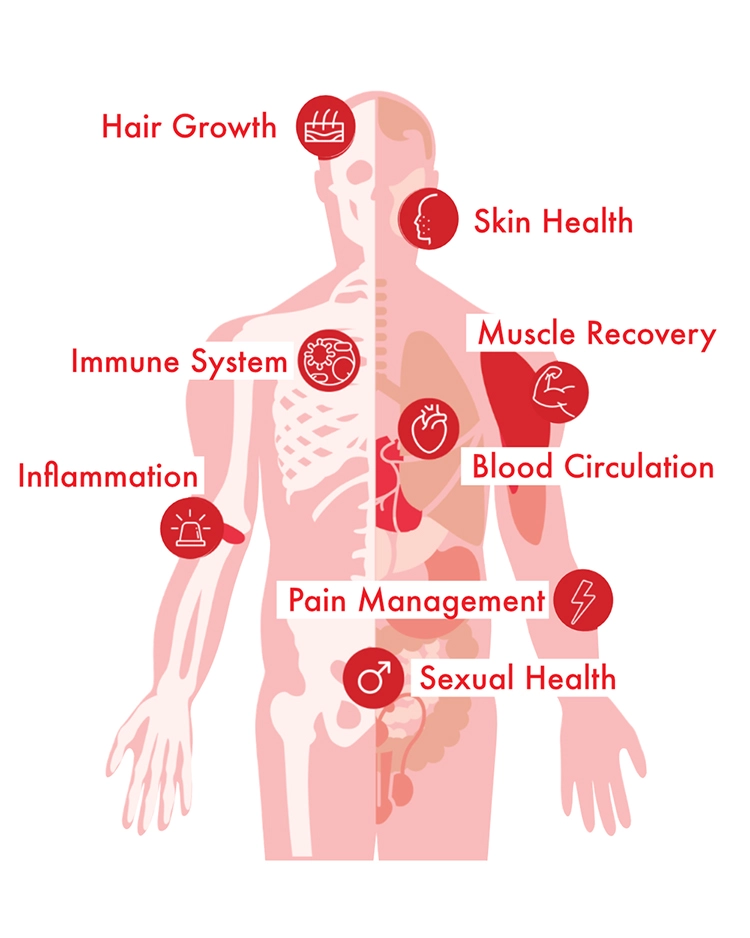
1. Accelerated Recovery & Reduced DOMS
RLT facilitates the removal of metabolic waste (lactate) and repairs micro-tears. By targeting muscle recovery, it drastically shortens downtime between high-intensity sessions.
2. Management of Inflammation & Joint Pain
Unlike cryotherapy which suppresses inflammation, PBM modulates the cellular response. It is highly effective for chronic conditions such as tendonitis, tennis elbow, runner’s knee, plantar fasciitis, and shoulder impingement. For athletes recovering from knee surgery specifically, our red light therapy after knee surgery guide covers clinical protocols for ACL reconstruction and prehab.
3. Pre-Conditioning (Performance Enhancement)
Applying light before exercise saturates tissue with photonic energy, priming mitochondria for peak output. This “pre-conditioning” effect can improve torque, endurance, and time-to-exhaustion.
4. Hormonal Balance & Testosterone
Research indicates RLT may support male hormonal health by mitigating oxidative stress in Leydig cells. Read our professional guide on Red Light Therapy for Testosterone.
5. Structural Integrity & Injury Prevention
NIR light acts as a catalyst for collagen synthesis, essential for repairing connective tissue and strengthening tendons against strain.
Operational Protocols
Optimization requires precise timing. Adhering to the Biphasic Dose Response curve is essential to prevent inhibitory effects.
Pre-Conditioning
PERFORMANCE PHASE
- Timing: 30–60 minutes prior to activity.
- Dosage: Low to Medium (5–10 minutes).
- Mechanism: Increases ATP availability and blood flow.
- Note: Avoid long sessions to prevent muscle relaxation before heavy lifting.
Recovery Phase
REPAIR PHASE
- Timing: Within 2 hours post-activity.
- Dosage: Medium to High (10–20 minutes).
- Mechanism: Clears lactate, reduces cytokines, initiates repair.
- Pairing: Ideal when combined with hydration and sleep.

Conclusion
Red light therapy has transitioned from experimental to essential. By integrating professional-grade panels with dual-chip technology, athletes can significantly extend their career longevity and performance output. Whether outfitting a commercial recovery facility or a home gym, equipment quality dictates results.
Recommended Equipment
- Systemic Recovery: YouLumi Max Performance (1700W) – High irradiance for full-body coverage.
- Targeted Therapy: Targeted Panel (300W) – Precision treatment for joints.
- Mobile Use: Portable Mini Panel – Travel-ready recovery.


Frequently Asked Questions
RLT vs. Ice Baths: Which is superior for recovery?
While cryotherapy numbs pain, it can blunt the body’s hypertrophic adaptation. Red Light Therapy promotes blood flow and energy production, supporting recovery without hindering muscle growth. RLT is the preferred modality for long-term tissue health.
Does PBM support muscle hypertrophy?
Indirectly, yes. By reducing fatigue and stimulating satellite cells, PBM allows athletes to train with higher volume and intensity. Systematic reviews suggest improved muscle mass gains when PBM is used in conjunction with resistance training.
Is protective eyewear required?
For high-irradiance athletic panels, brightness can be uncomfortable. We recommend protective eyewear, especially when using Near-Infrared modes near the face. See our Eye Safety Standards.
Clothing protocols?
Clothing absorbs and blocks light waves. For clinical efficacy, the light must be applied directly to bare skin.
Contraindications?
RLT is non-invasive and generally safe. However, users on photosensitizing medications or with active malignancies should consult a physician. Refer to our Safety & Contraindications List.


