
For any clinic, med-spa, or rehabilitation center, patient safety and device longevity are paramount. A robust cleaning and disinfection protocol for your red light therapy equipment is not just a best practice—it’s a cornerstone of professional care. This guide provides a comprehensive Standard Operating Procedure (SOP), grounded in federal guidelines, to protect your clients and your investment. Properly managing these non-critical, high-touch surfaces requires a clear understanding of the CDC disinfection & Spaulding framework, meticulous attention to disinfectant contact time, and diligent logging. Optimizing your services also means ensuring correct application, which you can fine-tune with a red light therapy dosage calculator for consistent patient outcomes. For veterinary or pet rehabilitation rooms, extend the SOP to fur, carriers, mats, and chewing risk; our red light therapy rabbits guide shows how rabbit PBM changes cleaning and session design.
What rules we follow
A dependable cleaning protocol isn’t arbitrary; it’s built upon established infection control frameworks from leading public health and safety organizations. By aligning your procedures with these standards, you create a defensible, science-backed system that prioritizes patient and staff well-being.
Spaulding classification for red-light devices
The Spaulding Classification is a widely adopted system that categorizes medical devices based on their risk of transmitting infection. Red light therapy devices, such as panels, beds, or belts, are considered non-critical items. This is because they only come into contact with intact skin, which serves as a natural barrier to most microorganisms. Therefore, they require low-level to intermediate-level disinfection rather than the sterilization needed for surgical instruments.
Outpatient environmental cleaning
As red light therapy is administered in outpatient settings, your protocols should align with guidelines for these environments. Surfaces that are frequently touched by patients and staff, known as high-touch surfaces, require more frequent and rigorous cleaning. The CDC provides specific recommendations for cleaning these surfaces to prevent the spread of infectious agents. It’s critical to adhere to these standards, which define the CDC minimum expectations for outpatient settings to ensure a safe care environment. Furthermore, the CDC environmental infection control guidelines advise against routine fogging or fumigation for disinfection unless specifically indicated for a known pathogen.
When to switch to OSHA pathway
Standard procedures are sufficient for routine use. However, if a device surface becomes contaminated with blood or other potentially infectious materials (OPIM), you must escalate your protocol. In the event of a blood/body-fluid spill, your team must follow the procedures outlined in the OSHA 29 CFR 1910.1030 Bloodborne Pathogens Standard. This involves using a registered tuberculocidal disinfectant and adhering to specific PPE and disposal requirements.
Follow Routine Between-Patient SOP
- ✓ Clean surface to remove soil
- ✓ Use Hospital-Grade Disinfectant
- ✓ Respect Contact Time
Activate OSHA Bloodborne Pathogen Protocol
- ✓ Use PPE (Gloves, Gown, Eye Protection)
- ✓ Use Tuberculocidal Disinfectant
- ✓ Follow specific disposal procedures
Disinfectant selection & reading “contact time”
Choosing the right disinfectant and using it correctly are the most critical components of your SOP. A common failure point is not understanding or respecting the product’s required “contact time” or “dwell time”—the period a surface must remain visibly wet to effectively kill microorganisms.
Read the label in three steps
Every EPA-registered disinfectant includes a label with instructions for use. This is a legal document, and failure to follow it invalidates the disinfection process.
- Check for the EPA Registration Number: This number confirms the product has been reviewed and approved by the EPA.
- Identify the Target Organisms: Ensure the product is effective against common bacteria and viruses relevant to a healthcare setting (bactericidal, virucidal).
- Find the Contact Time: The label will specify how long the surface must remain wet. The EPA guidance on disinfectant “contact time” emphasizes that you must keep surfaces visibly wet for this entire duration for the product to work as intended.
Choosing List N/hospital-grade products
For clinical environments, it is best practice to use a hospital-grade disinfectant. During public health emergencies, the EPA also provides lists of approved products. For example, you can consult EPA List N for disinfectants effective against SARS-CoV-2. When selecting a product, always check for its EPA Reg. No. on the label to verify its claims and find it on relevant lists.
Contact-time mini table
Contact times can vary significantly between products. Here is a general guide, but always defer to the manufacturer’s label.
| Active Ingredient | Typical Contact Time | Common Formulations |
|---|---|---|
| Quaternary Ammonium | 3–10 minutes | Wipes, Sprays |
| Accelerated Hydrogen Peroxide | 1 minute | Wipes, Sprays |
| 70% Isopropyl Alcohol | 30 seconds–1 minute | Wipes, Sprays |
| Sodium Hypochlorite (Bleach) | 5–10 minutes (varies by ppm) | Liquid Concentrate |
Materials compatibility
Not all disinfectants are safe for all surfaces. Harsh chemicals like bleach or some high-concentration alcohol solutions can degrade plastics, acrylics, and other materials used in red light therapy devices over time. This can lead to cracking, discoloration, and eventual equipment failure. Always consult your manufacturer’s instructions or a comprehensive red light therapy equipment guide to confirm which chemical agents are compatible with your specific device.
Between-patient turnover SOP (6 steps, printable)
This SOP provides a clear, repeatable process for your technicians to follow after every patient session. Consistency is key to infection control.
6-Step RLT Device Cleaning SOP
Gear Up (PPE)
Put on disposable gloves. Use eye protection if there’s a splash risk.
Power Down
Turn off and unplug the device to prevent any electrical hazards.
Clean First
Use a neutral cleaner to remove surface soil, oils, or residues first.
Disinfect
Apply an EPA-registered disinfectant. Do not spray directly onto the device.
Respect Contact Time
Keep the surface visibly wet for the entire duration required by the label.
Dry & Doff
Allow to air dry or wipe with a clean cloth, then safely dispose of gloves.
- Gear Up (PPE): Put on disposable gloves. Goggles or a face shield may be necessary if there is a risk of splashing.
- Power Down: Ensure the red light therapy device is turned off and unplugged from the power source to prevent electrical hazards and damage.
- Clean First: Use a wipe or a cloth dampened with a neutral pH cleaner to remove any surface soil, oils, or lotion residues. Disinfection is ineffective on a visibly dirty surface.
- Disinfect Correctly: Apply your chosen EPA-registered, hospital-grade disinfectant. Use pre-moistened wipes or apply the disinfectant to a cloth first—never spray liquid directly onto the device to avoid fluid ingress into electronic components. Cover the entire surface area that was in contact with the patient.
- Respect Contact Time: This is the most crucial step. Leave the surface visibly wet for the full contact time specified on the disinfectant label (e.g., 3 minutes). If it dries prematurely, reapply. Do not wipe it dry before the time is up.
- Dry & Doff: Once the contact time is complete, either allow the surface to air dry or wipe it with a clean, dry cloth, as directed by the disinfectant label. Safely remove and dispose of your gloves. Sanitize your hands.
Daily / Weekly / Monthly tasks & sample audit
Beyond between-patient turnover, a comprehensive protocol includes periodic deep-cleaning and auditing to ensure compliance.
- Daily (End of Day):
- Perform a full disinfection of all RLT devices, even those not used.
- Clean and disinfect high-touch surfaces in the treatment room (doorknobs, chairs, counters).
- Review all cleaning logs for completeness and accuracy.
- Weekly:
- Inspect device surfaces for any signs of wear, cracking, or material degradation from cleaning agents.
- Check power cords and connections for safety.
- Restock PPE and cleaning supplies.
- Monthly:
- Conduct a compliance audit. Observe a staff member performing the turnover protocol.
- Review all cleaning logs from the past month to identify patterns or gaps.
- This audit process helps ensure you are meeting the CDC minimum expectations for outpatient settings consistently.
Common mistakes & device protection
Even with a protocol in place, errors can happen. Training staff to recognize and avoid these common mistakes is vital for both safety and preserving your equipment.
- Ignoring Contact Time: Wiping disinfectant off immediately after applying it is the most frequent error. This action is equivalent to simple cleaning and does not achieve disinfection.
- Using the Wrong Product: Using a consumer-grade cleaner instead of an EPA-registered, hospital-grade disinfectant does not meet clinical standards.
- Spraying Directly: Spraying liquids directly onto an electronic device can cause short circuits and permanent damage.
- Material Incompatibility: Using harsh solvents or abrasive cleaners (e.g., bleach on a sensitive acrylic surface) can cause irreversible damage. Always refer to your device manual.
About Youlumi — Clinic-Ready Red-Light Solutions
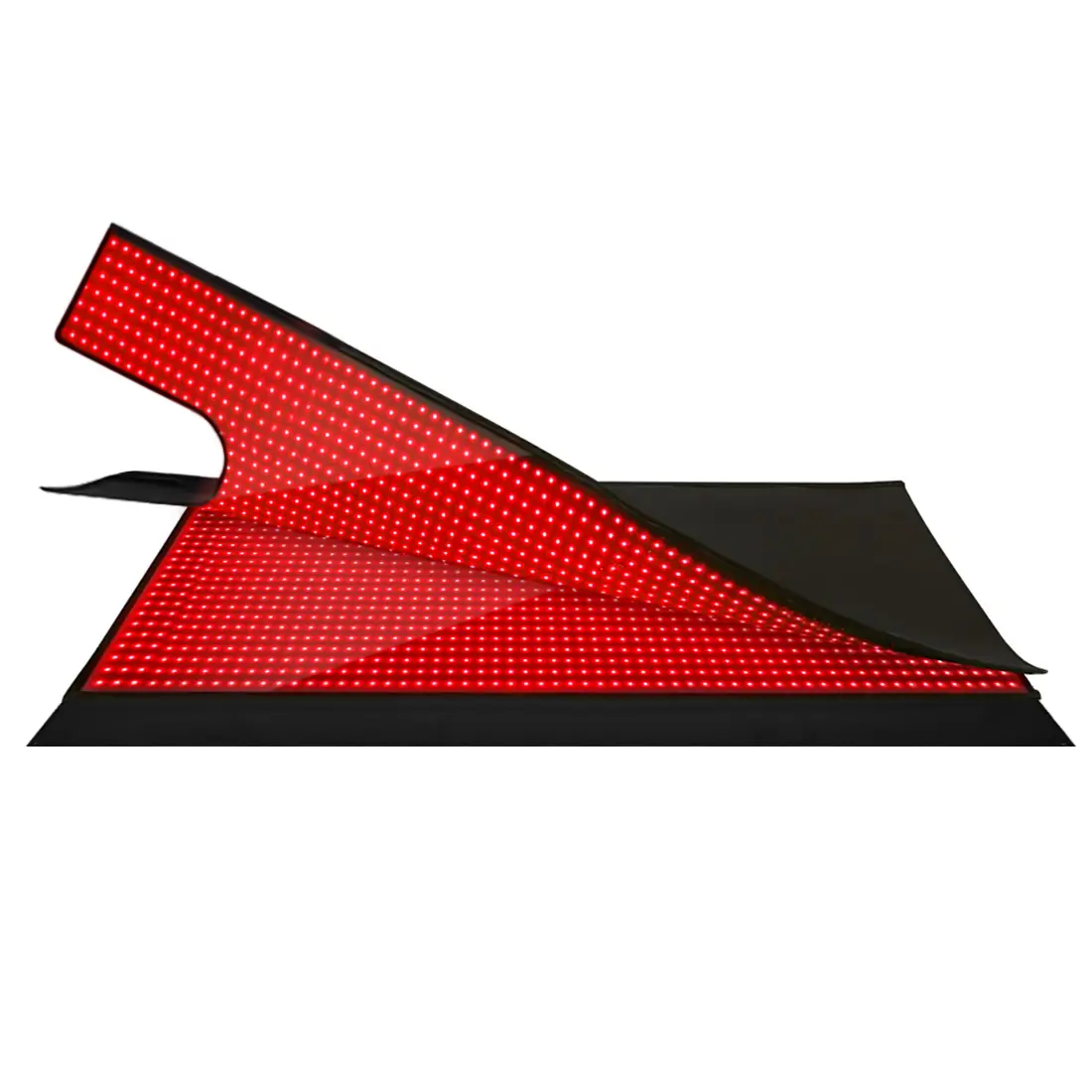
At Youlumi, we design our red light therapy equipment with the demands of a clinical environment in mind. Our devices are built from durable, high-quality materials selected for their compatibility with common hospital-grade disinfectants. From high-output devices like the Youlumi 1600W panel to targeted solutions like our flexible red light therapy belt 40W, each product is engineered for efficacy, safety, and ease of maintenance. For full-body applications, the red light therapy sleep bag offers a unique modality with straightforward cleaning protocols. We provide comprehensive support, including training packs, downloadable SOPs, and materials-compatibility guides, all available on the Youlumi blog hub.
Clinic-Ready Red Light Therapy Solutions


Download Your Free Clinic Resources
Empower your team with these ready-to-use templates to implement this protocol in your clinic today.
For questions or to get a detailed Materials-Compatibility Sheet, please contact our team.
Summary
A professional cleaning protocol is non-negotiable. Here are the key pillars of an effective system:
- Classify Devices: Understand that RLT devices are non-critical and require low-to-intermediate level disinfection.
- Follow the Label: The disinfectant label is a legal directive. Adherence to the specified contact time is mandatory for effective disinfection.
- Document Everything: Use logs to track every cleaning cycle, ensuring accountability and compliance.
- Choose Wisely: Select EPA-registered, hospital-grade disinfectants that are compatible with your device’s materials.
- Train & Audit: Regularly train your staff on the SOP and conduct audits to verify compliance.
FAQ
1. What’s the difference between cleaning, sanitizing, and disinfecting?
These terms are often used interchangeably but have distinct meanings. Cleaning removes germs and dirt from surfaces, but doesn’t necessarily kill them. Sanitizing lowers the number of germs to a safe level. Disinfecting, which is the standard for clinical settings, uses chemicals to kill germs on surfaces. The EPA guidance on disinfectant “contact time” is crucial for the disinfecting step to be successful.
2. Can we use standard 70% alcohol wipes on the device and LEDs?
This depends entirely on the device manufacturer. While 70% isopropyl alcohol is an effective disinfectant, it can damage certain plastics and coatings over time. Always check your equipment’s material compatibility guide before using alcohol-based products.
3. How often should we update our cleaning log?
The cleaning log should be filled out immediately after each cleaning instance. This means completing an entry after every single patient turnover. This creates an accurate, real-time record of your infection control practices.
4. What should we do if a patient has a known contagious condition (e.g., MRSA, C. diff)?
If you are treating a patient with a known, highly resistant organism, you must consult the disinfectant label to ensure it has an efficacy claim against that specific pathogen. For C. diff, a sporicidal agent (typically a bleach-based product) is required, which may not be compatible with your device. In such cases, using a disposable, transparent barrier to protect the device surface is the best course of action.
5. Is fogging the treatment room a good way to disinfect everything at once?
No. The CDC does not recommend fogging or fumigation as a standard disinfection method in healthcare settings. Disinfection requires direct surface contact with the chemical for a specific duration, which fogging does not guarantee. It can also pose respiratory risks and is not a substitute for manual surface cleaning and disinfection.
6. Where can I find the EPA registration number on a product?
The EPA Registration Number (EPA Reg. No.) is legally required to be printed on the product label. It is typically found on the front or back panel and is formatted as “EPA Reg. No. 12345-67”. This number is your key to verifying the product’s approval and claims.


